Fun reading and word games for year 2
1st grade is the decoding year: blending sounds into words, digraphs (sh, ch, th), silent e, and the first hundred sight words. Expect wobbly, effortful reading — the games' job is rep volume without tears.
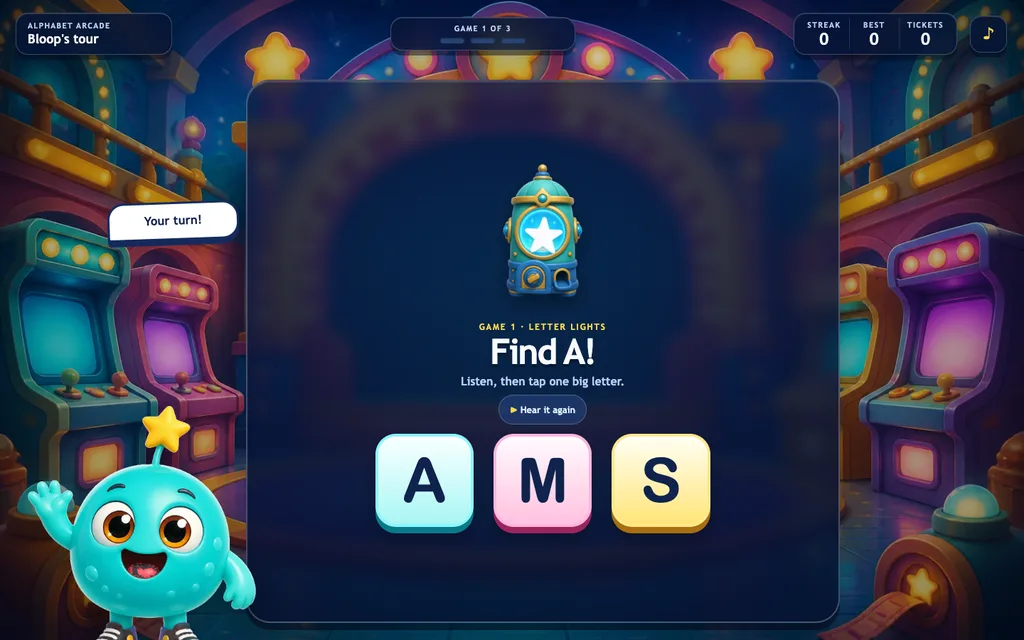 Alphabet ArcadeEnglish · Ages 4-6
A letter keeps its identity when it is uppercase or lowercase, and its sound helps us recognize words that begin with it.
Sound BlenderEnglish · Ages 4-8A spoken word appears when every letter-sound or sound chunk is blended smoothly from left to right; the same ordered sounds can be segmented to build the written word.
Trace & RaceEnglish · Ages 4-7Clear handwriting grows from starting each stroke in the right place, moving in a steady direction, and following the strokes in order.
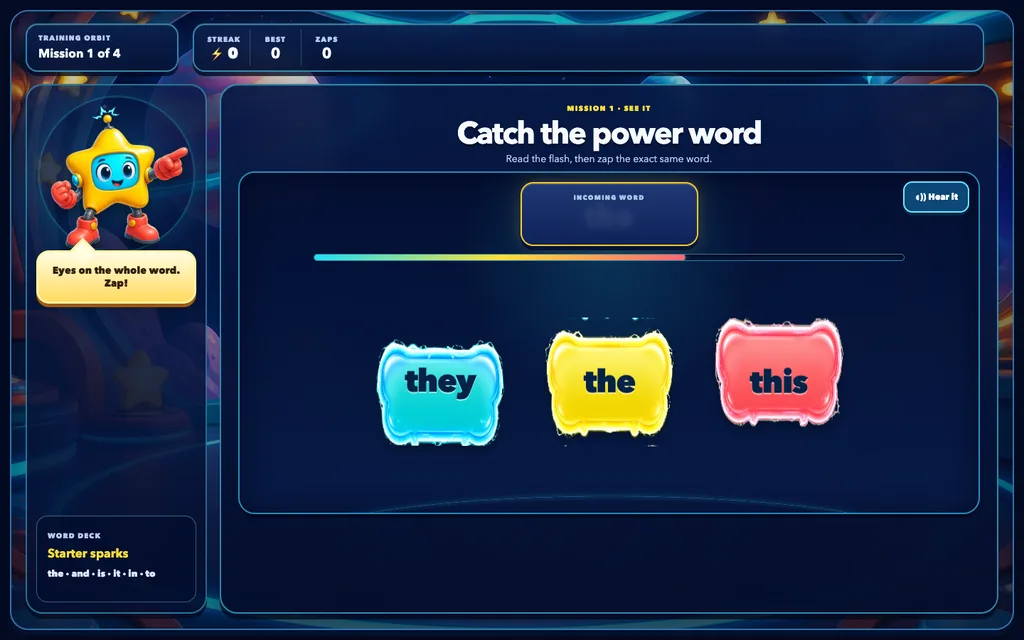 Word ZapEnglish · Ages 5-9
High-frequency words become quick to read when we recognise the whole written word, connect it to its spoken form, and practise it again after a useful gap.
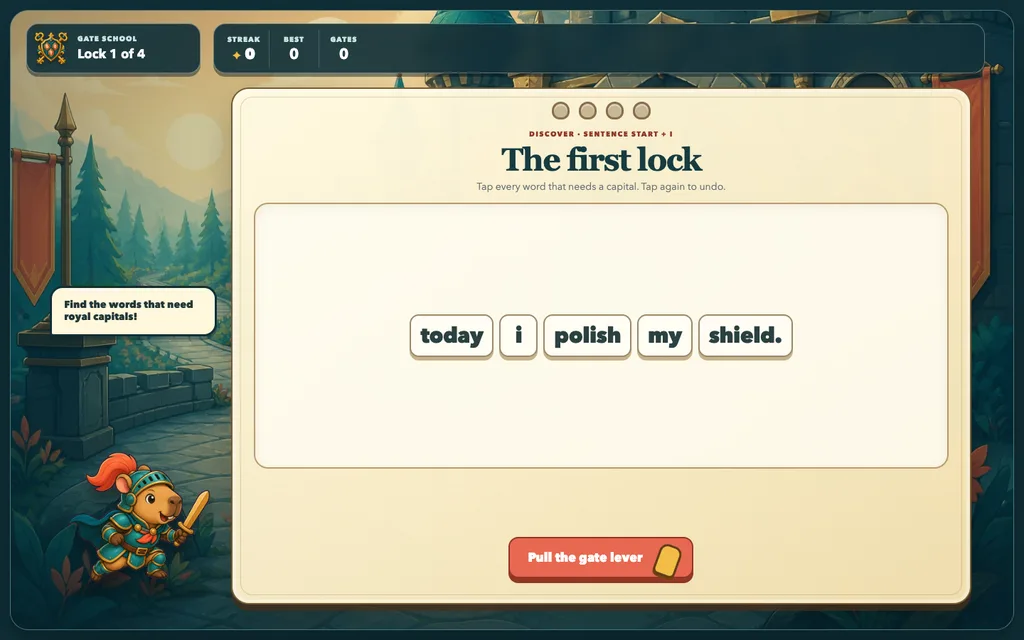 Capital QuestEnglish · Ages 6-10
Capital letters signal the beginning of a sentence and the special names of people, places, days, months, and titles; ordinary words stay lowercase.
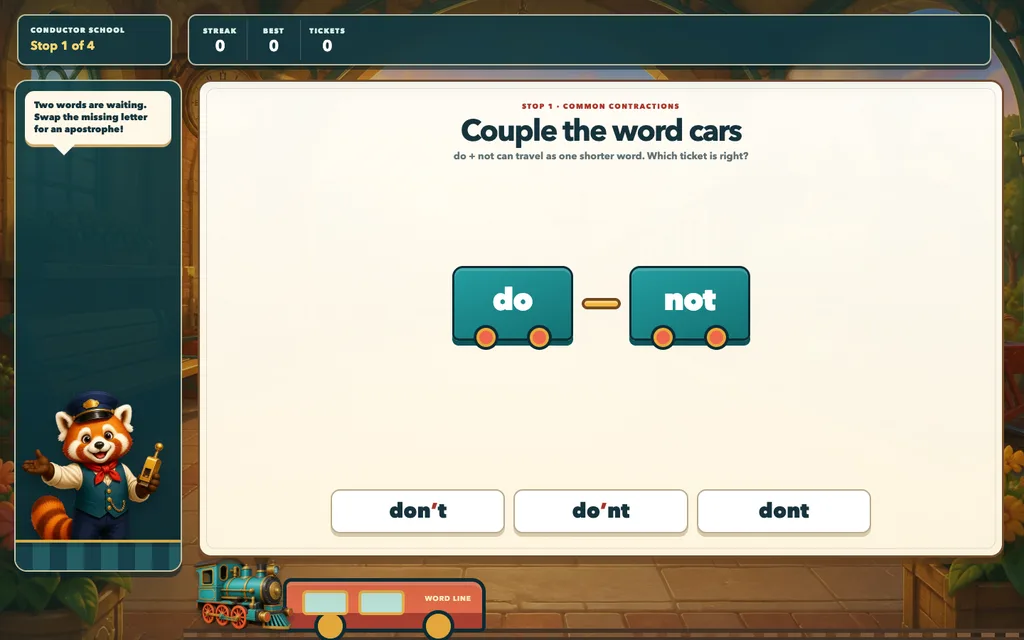 Contraction StationEnglish · Ages 6-10
A contraction joins words into a shorter form; the apostrophe stands where one or more letters were removed, while the meaning stays the same.
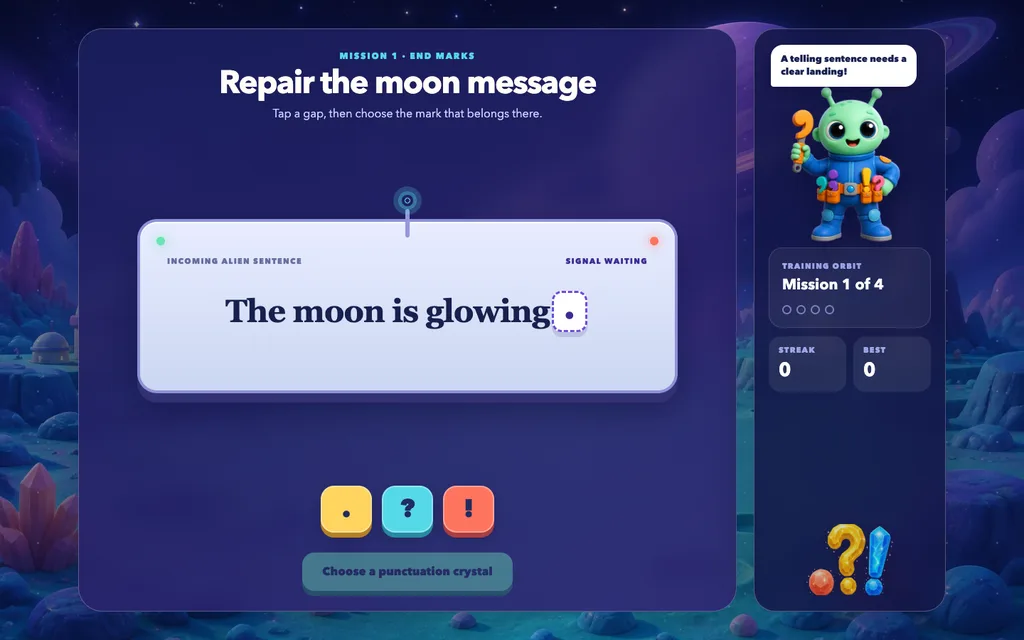 Punctuation PlanetEnglish · Ages 6-11
Punctuation is part of a sentence's meaning: end marks show its intent, commas separate items, and apostrophes show missing letters or ownership.
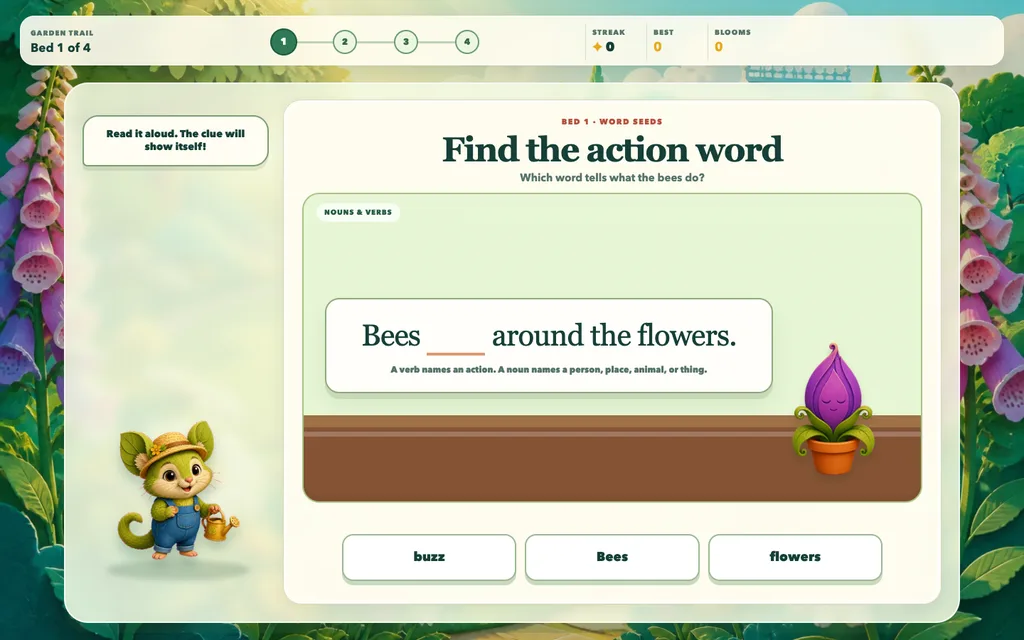 Grammar GardenEnglish · Ages 7-12
A sentence blooms when its words and marks agree with its meaning: the subject controls the verb, time controls the tense, and capitals and punctuation show where ideas begin and end.
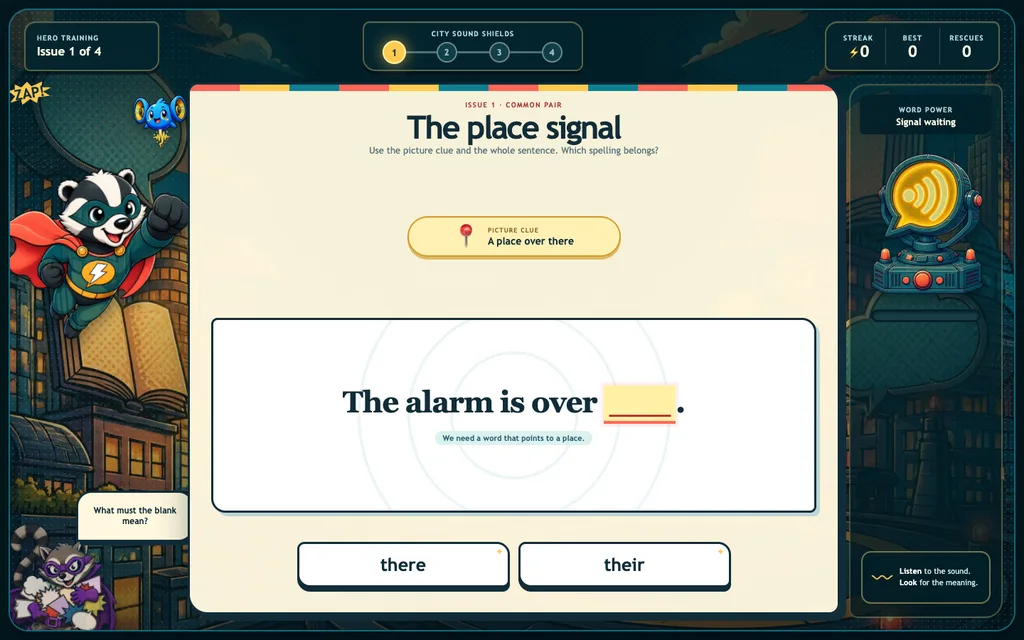 Homophone HeroesEnglish · Ages 7-12
Homophones sound alike but carry different meanings, so the surrounding sentence and picture clue—not the sound alone—reveal the word that belongs.
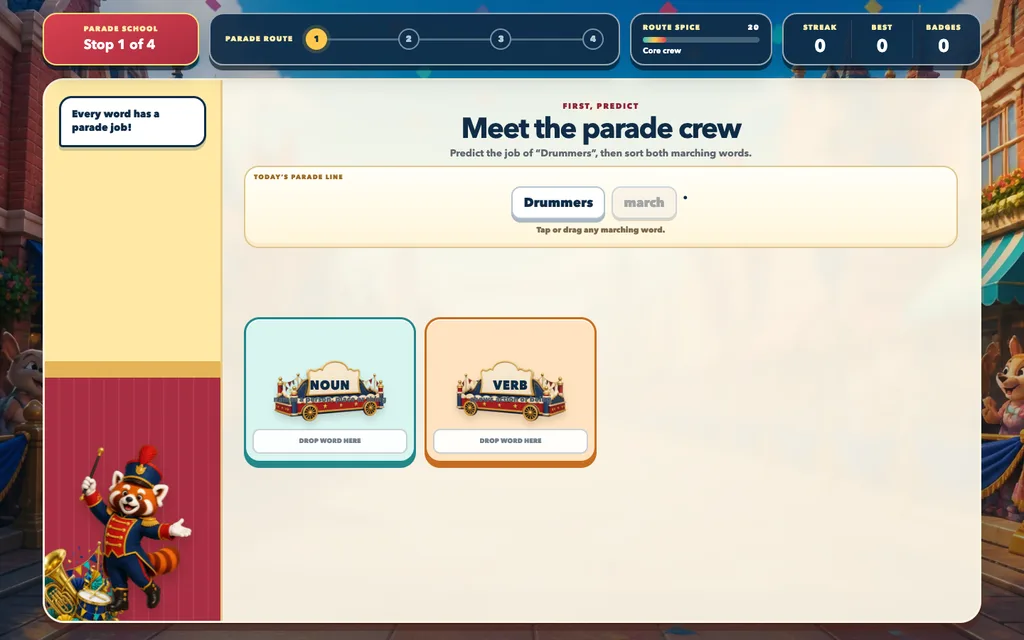 Parts of Speech ParadeEnglish · Ages 7-12
A word's part of speech is the job it performs in its sentence: nouns name, verbs show action or being, adjectives describe nouns, and adverbs modify actions or descriptions.
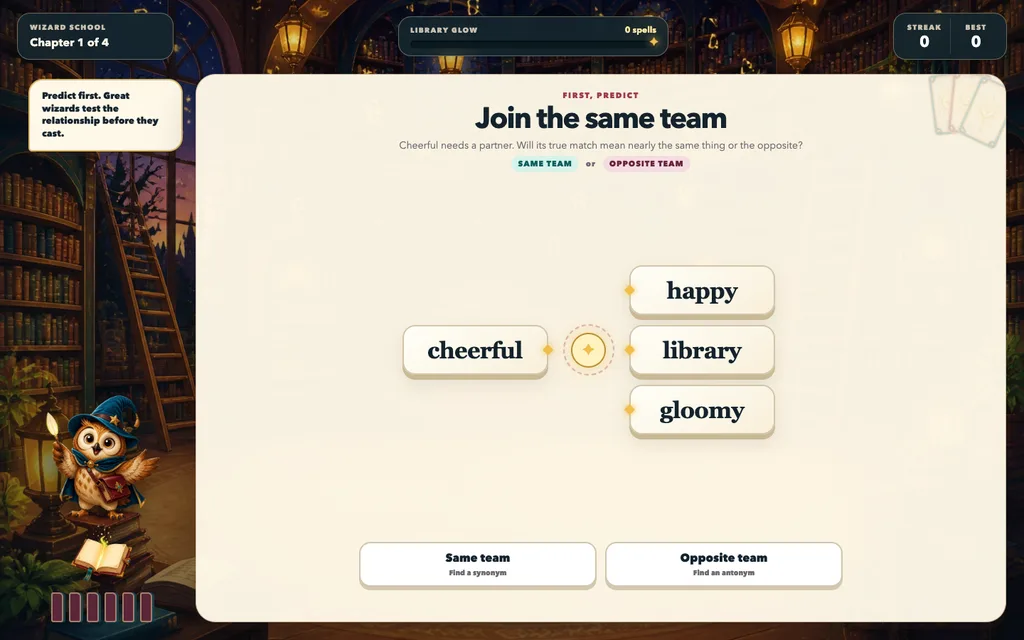 Word MatchEnglish · Ages 7-12
Synonyms share a meaning team, antonyms pull meanings in opposite directions, and near-synonyms can carry different strengths or shades of meaning.
Getting the most out of reading and word games at this age
- Out-loud beats silent for word games — hearing the sounds is half the lesson.
- Follow any spark: a kid who liked one word game will usually take a harder one immediately after.
- Keep real books nearby. Word games sharpen the tools; books are what the tools are for.
Common questions
What reading and word skills should year 2 learn?
1st grade is the decoding year: blending sounds into words, digraphs (sh, ch, th), silent e, and the first hundred sight words. Expect wobbly, effortful reading — the games' job is rep volume without tears.
Are these games free?
Every Ako lesson here runs in the browser, and your first one is completely free — no account, no card. A subscription unlocks the full catalog of 100+ lessons.
How are Ako lessons different from other learning games?
Ako — a voice AI tutor — is inside every game. He sees what your child does, asks for predictions before they act, and adapts his coaching to their age. Parents get a weekly note about what actually clicked.